

How Can an EMDR Trauma Therapist Help With Emotional Healing?
EMDR therapy with a dedicated trauma therapist at Kimina Counseling LLC in Auburn, MA offers a clear path toward processing past trauma and reducing anxiety. Licensed mental health counselors Kimberly Sanchez, LMHC, and Amina Mazzara, LMHC, and the team guide you in safely working through painful memories so they no longer cause daily emotional distress. By using targeted bilateral stimulation, EMDR helps reframe traumatic experiences, restoring a sense of balance and peace. Working alongside skilled clinicians provides the structure and compassionate support needed to achieve lasting emotional healing. For more information, contact us or schedule an appointment online. We are conveniently located at 7 Midstate Drive, Suite 202, Auburn, MA 01501.
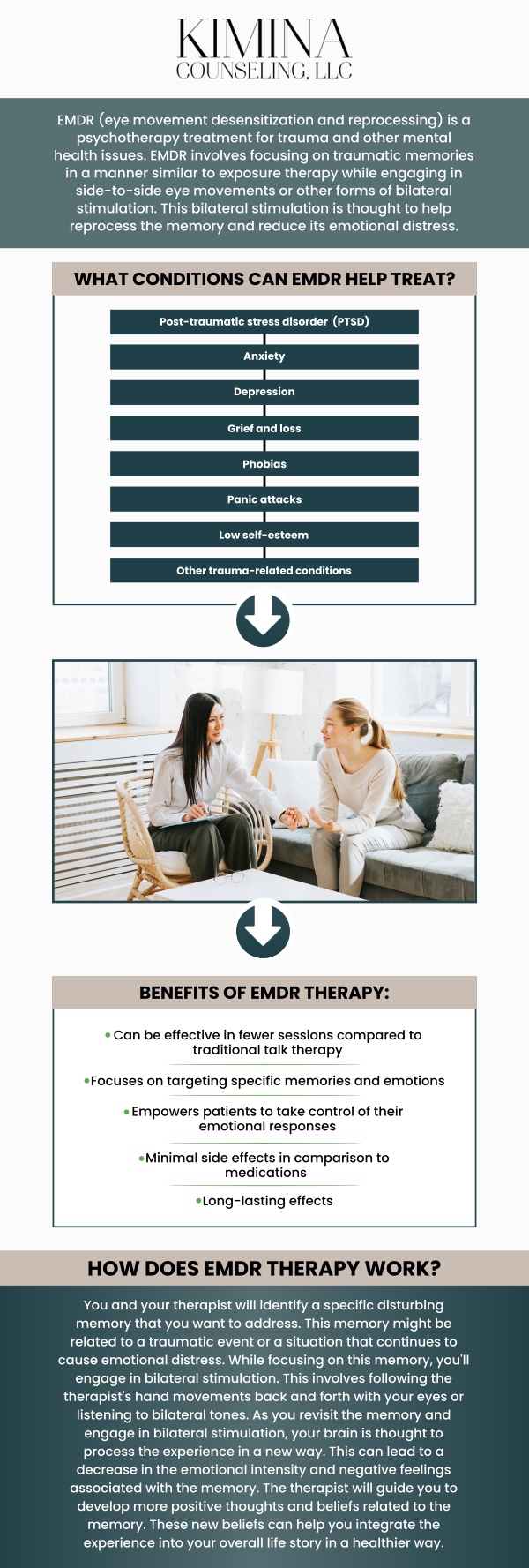
Table of Contents:
What does an EMDR trauma therapist do during trauma-focused therapy?
Can an EMDR trauma therapist help with anxiety, fear, and past experiences?
What should you look for when choosing an EMDR trauma therapist?
How long does treatment with an EMDR trauma therapist usually take?
How can our team help with trauma-focused EMDR care?
Trauma-Focused EMDR Care With Kimberly Sanchez, LMHC, and Amina Mazzara, LMHC at Kimina Counseling LLC in Auburn, MA
Emotional distress after a difficult experience does not always disappear when the event is over. Memories, fears, physical reactions, and negative thoughts may continue to surface during everyday situations, making it harder to feel secure or emotionally balanced. Working with an EMDR trauma therapist provides a structured way to explore these concerns and develop healthier responses to experiences that continue to feel upsetting.
At Kimina Counseling LLC in Auburn, MA, Kimberly Sanchez, LMHC, and Amina Mazzara, LMHC, provide individualized trauma-focused support based on each client’s experiences, emotional needs, and therapy goals. Our team uses a thoughtful approach that allows clients to build coping skills, understand emotional patterns, and work through difficult memories at a manageable pace.
An EMDR trauma therapist helps clients identify experiences that may be contributing to current emotional reactions and guides them through a structured therapeutic process. EMDR stands for Eye Movement Desensitization and Reprocessing. Rather than asking clients to repeatedly describe every detail of a traumatic event, EMDR focuses on how certain memories, thoughts, emotions, and physical sensations remain connected.
At our clinic, Kimberly Sanchez, LMHC, and Amina Mazzara, LMHC, begin by learning about the concerns affecting each client. Preparation can include identifying triggers, discussing coping strategies, and creating ways to manage emotional discomfort before memory-processing work begins.
Trauma-focused EMDR care may involve:
• Identifying experiences connected with current distress
• Exploring thoughts or beliefs associated with those memories
• Recognizing emotions and physical reactions that arise
• Developing grounding and self-regulation strategies
• Selecting specific memories to address
• Using bilateral stimulation during appropriate stages of EMDR
• Monitoring emotional responses throughout treatment
• Reinforcing healthier perspectives as processing progresses
Our team does not approach trauma treatment as a rushed process. Kimberly Sanchez, LMHC, and Amina Mazzara, LMHC, consider each client’s comfort, readiness, and goals while determining how sessions should progress.
Past experiences can sometimes shape how a person responds to present-day situations. An individual may understand logically that a current situation is safe but still experience intense worry, fear, tension, or avoidance. These reactions can develop when reminders of an earlier experience activate emotions that still feel unresolved.
An EMDR trauma therapist may help explore connections between past experiences and current emotional responses. At Kimina Counseling LLC, our team works with clients to recognize these patterns and understand why particular situations, memories, or reminders may produce strong reactions.
EMDR may be considered when concerns involve:
• Trauma-related memories
• Persistent fear after difficult experiences
• Anxiety connected with specific events
• Intrusive or unwanted memories
• Emotional reactions to reminders of the past
• Avoidance of certain situations
• Negative beliefs that developed after distressing experiences
• Feelings of guilt, shame, helplessness, or vulnerability
• Physical tension associated with emotional triggers
The purpose of trauma-focused therapy is not to force someone to forget what happened. Instead, Kimberly Sanchez, LMHC, and Amina Mazzara, LMHC, can help clients work toward changing how strongly past experiences influence present emotions and daily functioning.
Choosing an EMDR trauma therapist involves finding someone who can provide structured trauma-focused care while also creating an environment where personal concerns can be discussed comfortably. A strong therapeutic relationship is especially important when treatment involves experiences that may be difficult to revisit.
Clients may want to consider whether care includes:
• Experience working with trauma-related concerns
• Knowledge of the EMDR process
• Clear explanations about what treatment involves
• Individualized rather than standardized treatment planning
• Attention to emotional readiness before memory processing
• Strategies for grounding and emotional regulation
• Respect for personal boundaries and treatment preferences
• Opportunities to discuss concerns and progress throughout therapy
At our clinic, Kimberly Sanchez, LMHC, and Amina Mazzara, LMHC, focus on understanding the individual behind the symptoms. Our team considers personal history, present concerns, strengths, coping patterns, and therapy goals when developing an approach to care.
Clients should also feel comfortable asking questions about EMDR and discussing what they need in order to feel supported during sessions. Trauma therapy is collaborative, and treatment can be adjusted as needs and goals evolve.
There is no single treatment timeline that applies to every client. The length of EMDR therapy depends on several factors, including the nature of the concerns being addressed, the number of experiences involved, current symptoms, coping abilities, and individual treatment goals.
Some individuals may be working through one specific experience, while others may have a longer history of difficult events or more complex emotional patterns. Because these situations are different, the number and pace of sessions may also differ.
Factors that can influence the course of treatment include:
• The type of trauma or distressing experience
• How long symptoms have been present
• The number of memories being addressed
• Current emotional stability
• Existing coping strategies
• Other mental health concerns
• Individual responses during EMDR processing
• Personal therapy goals
• Progress between sessions
At Kimina Counseling LLC, Kimberly Sanchez, LMHC, and Amina Mazzara, LMHC, review progress throughout care rather than setting the same schedule for everyone. Our team can adjust the pace of treatment according to how a client responds and what areas need continued attention.
Trauma can affect much more than memories. It can influence relationships, confidence, emotional regulation, decision-making, sleep, and reactions to everyday stress. Our clinic takes these broader effects into consideration when developing an individualized treatment plan.
Kimberly Sanchez, LMHC, and Amina Mazzara, LMHC, can help clients:
• Better understand trauma-related emotional patterns
• Identify circumstances that trigger difficult reactions
• Develop practical grounding strategies
• Strengthen emotional regulation skills
• Address memories that continue to cause distress
• Explore negative beliefs associated with previous experiences
• Build healthier responses to present-day situations
• Track changes and progress throughout therapy
• Establish goals that reflect individual emotional needs
Our team recognizes that clients may enter therapy at different stages of readiness. Care can therefore begin with education, coping skills, and preparation before progressing into more focused EMDR work.
At Kimina Counseling LLC in Auburn, MA, Kimberly Sanchez, LMHC, and Amina Mazzara, LMHC, provide personalized support for clients who want help addressing trauma, difficult memories, fear, anxiety, and related emotional challenges. Our clinic focuses on creating a respectful environment where concerns can be explored without pressure to move through treatment faster than feels appropriate.
As part of trauma-focused care, our team considers how previous experiences may be affecting present emotions, behaviors, relationships, and overall well-being. Kimberly Sanchez, LMHC, and Amina Mazzara, LMHC, work with clients to establish meaningful treatment goals, strengthen coping strategies, and determine whether EMDR fits their individual needs.
For those seeking an EMDR trauma therapist, our clinic offers a personalized approach centered on careful preparation, structured therapeutic support, and each client’s individual path toward emotional healing and greater day-to-day stability. For more information, contact us or schedule an appointment online. We are conveniently located at 7 Midstate Drive, Suite 202, Auburn, MA 01501. We serve patients from Auburn MA, North Oxford MA, Worcester MA, Grafton MA, South Worcester MA, Newton Square MA, and surrounding areas.

Check Out Our 5 Star Reviews


Additional Services You May Need
▸ Individual Therapy
▸ Couples Conseling
▸ Family Counseling
▸ EMDR Therapy
▸ Anxiety
▸ Depression
▸ Trauma
▸ Post-traumatic stress disorder (PTSD)
▸ Bipolar Disorder
▸ Serious Mental Illness (SMI)
▸ Parenting and Post-Partum
▸ LGBTQ+
▸ Phobias
▸ Grief
▸ Attachment Disorders
▸ Personality Disorders
▸ Obsessive Compulsive Disorder
▸ Substance Use Disorders
▸ Family Conflict
▸ Attention Deficit (ADHD)
▸ Behavioral Therapy
▸ Anger Management

Additional Services You May Need
▸ Individual Therapy
▸ Couples Conseling
▸ Family Counseling
▸ EMDR Therapy
▸ Anxiety
▸ Depression
▸ Trauma
▸ Post-traumatic stress disorder (PTSD)
▸ Bipolar Disorder
▸ Serious Mental Illness (SMI)
▸ Parenting and Post-Partum
▸ LGBTQ+
▸ Phobias
▸ Grief
▸ Attachment Disorders
▸ Personality Disorders
▸ Obsessive Compulsive Disorder
▸ Substance Use Disorders
▸ Family Conflict
▸ Attention Deficit (ADHD)
▸ Behavioral Therapy
▸ Anger Management




 Send Text
 How May I Help You?