

FAQs About EMDR Therapy
EMDR therapy at Kimina Counseling, LLC, focuses on helping individuals heal from trauma, PTSD, anxiety, and other emotional struggles. By using Eye Movement Desensitization and Reprocessing (EMDR), Kimberly Sanchez, LMHC, and Amina Mazzara, LMHC, guide clients through the process of reprocessing distressing memories, reducing emotional reactivity, and promoting healing. The therapy helps individuals address the root causes of their struggles, leading to improved emotional wellness and resilience. Clients can expect compassionate, evidence-based care tailored to their specific needs. For more information, contact us or schedule an appointment online. We are conveniently located at 7 Midstate Drive, Suite 202, Auburn, MA 01501.
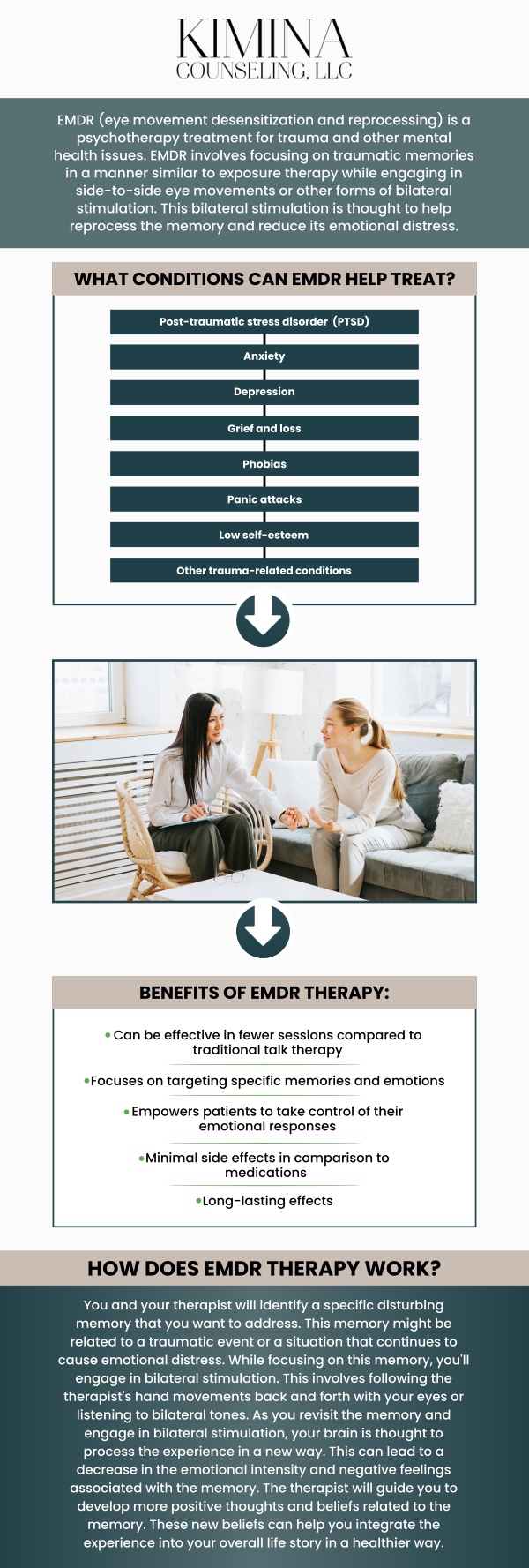
Table of Contents:
How does EMDR therapy work?
What conditions can EMDR therapy treat?
Is EMDR therapy effective for trauma?
Can EMDR therapy help with PTSD?
How many EMDR therapy sessions are typically needed?
Is EMDR therapy painful?
What can I expect during an EMDR therapy session?
How do I know if I need EMDR therapy?
Can EMDR therapy help with anxiety?
Are there any side effects of EMDR therapy?
Can EMDR therapy help with depression?
How soon will I see results from EMDR therapy?
Is EMDR therapy safe for people with a history of substance abuse?
Can EMDR therapy help with phobias?
Can EMDR therapy help with grief and loss?
How does EMDR therapy help reprocess traumatic memories?
EMDR (Eye Movement Desensitization and Reprocessing) is a therapeutic technique designed to help individuals process and heal from traumatic memories. The process involves recalling distressing memories while engaging in bilateral stimulation, typically through guided eye movements. This stimulation helps reprocess memories, reducing their emotional charge and allowing the brain to store them in a healthier way. As a result, the emotional intensity of traumatic memories decreases, and clients often experience better emotional regulation and resilience in the face of triggers.
EMDR therapy is effective for a range of conditions, particularly those related to trauma. It is widely used to treat PTSD (Post-Traumatic Stress Disorder), but it is also beneficial for anxiety disorders, panic attacks, phobias, depression, and chronic stress. Many clients with unresolved grief, performance anxiety, and emotional dysregulation also benefit from EMDR. By addressing the root causes of these conditions, EMDR helps reduce symptoms and promotes emotional healing, often leading to lasting improvements in overall well-being.
Yes, EMDR is recognized as one of the most effective therapies for trauma. It specifically targets the unprocessed traumatic memories that are often at the core of post-traumatic stress. By utilizing bilateral stimulation during the recall of these memories, EMDR allows the brain to process and integrate them in a healthier manner. This can lead to reduced emotional distress, fewer intrusive thoughts, and a more positive outlook for individuals struggling with the effects of trauma.
EMDR therapy is highly effective for treating PTSD, which is characterized by intrusive memories, flashbacks, and emotional distress related to past traumatic events. Through reprocessing traumatic memories, EMDR helps alleviate the emotional intensity of these memories, making them easier to cope with. Many clients experience significant relief from PTSD symptoms, including a reduction in flashbacks, nightmares, and hyperarousal, as well as improved emotional stability and functioning.
The number of EMDR sessions required varies depending on the complexity of the trauma and the individual’s response to treatment. Some individuals experience relief after just a few sessions, while others with more complex histories may need additional sessions. Typically, clients undergo between 6 to 12 sessions, but this can be adjusted based on progress. The therapist works closely with the client to assess their progress and tailor the therapy to their specific needs, ensuring that treatment is both effective and manageable.
EMDR therapy itself is not physically painful, but it can evoke emotional discomfort as it involves recalling distressing memories. However, this discomfort is temporary and is managed with the support of the therapist. The goal of EMDR is to reduce the emotional intensity of these memories, and while some clients may experience discomfort initially, the overall outcome is often a reduction in distressing symptoms. The therapist ensures that clients feel safe and in control throughout the process.
During an EMDR session, the therapist will begin by discussing your history and identifying target memories to work on. The therapist will guide you through the process of recalling a specific memory while engaging in bilateral stimulation, such as following the therapist’s hand movements with your eyes. As you focus on the memory, the stimulation helps reprocess the emotional charge associated with it. Throughout the session, the therapist will check in to ensure you are feeling safe and comfortable, making adjustments as needed to ensure the process is effective and supportive.
If you are struggling with unresolved trauma or emotional distress that significantly impacts your daily life, EMDR therapy could be beneficial. Symptoms like flashbacks, intrusive memories, heightened anxiety, difficulty sleeping, or a persistent feeling of being stuck can all indicate that EMDR may be helpful. A licensed mental health professional can assess whether EMDR is right for you based on your history and symptoms. EMDR can be an effective treatment for individuals who have experienced trauma, anxiety, or other emotionally disruptive conditions.
Yes, EMDR therapy can be very effective for treating anxiety. By addressing the root causes of anxiety, including past traumatic experiences or ongoing stress, EMDR helps reduce the emotional intensity of anxious feelings. As memories related to anxiety are reprocessed, clients often experience a decrease in anxious thoughts, emotional reactivity, and physical symptoms associated with anxiety. Over time, many individuals report feeling calmer, more confident, and better able to manage stress.
While EMDR therapy is generally safe, some individuals may experience temporary side effects such as emotional exhaustion or heightened emotional responses after a session. This is normal and typically subsides as the brain processes the traumatic memories. Occasionally, people may experience vivid dreams or have strong emotional reactions during the reprocessing phase. However, these side effects are usually short-lived and are part of the healing process. Your therapist will provide coping strategies to help manage any discomfort during and after sessions.
EMDR therapy can be helpful for individuals with depression, especially when the depression is linked to unresolved trauma or distressing life events. By processing the memories and emotional wounds at the core of the depression, EMDR can reduce feelings of hopelessness and sadness. Many clients find that after EMDR therapy, they experience greater emotional resilience, increased motivation, and improved mood, contributing to a reduction in depressive symptoms.
The timeline for seeing results from EMDR therapy varies. Some individuals may begin to feel relief after just a few sessions, especially if the trauma is less complex or if it’s the first time they’re addressing a specific issue. Others, particularly those with long-term or complex trauma, may take longer to see significant improvements. However, many clients start noticing a reduction in distressing symptoms, such as anxiety, intrusive thoughts, and emotional reactivity, within the first few weeks of treatment.
EMDR therapy can be safe for individuals with a history of substance abuse, provided they are stable in their recovery. The therapy can help address underlying trauma or emotional wounds that may contribute to substance use or relapse. However, it is crucial that EMDR therapy be part of a comprehensive treatment plan that includes support for addiction recovery. Your therapist will work with you to ensure that EMDR therapy is appropriate and supportive of your recovery process.
Yes, EMDR can be an effective treatment for phobias. Phobias are often rooted in past traumatic experiences or learned fears that are stored in the brain as negative memories. EMDR helps by reprocessing these memories, reducing the emotional intensity associated with the fear. As a result, many individuals with phobias experience a reduction in their fear responses, making it easier to confront the feared situation or object without excessive anxiety.
EMDR can be very helpful for those struggling with grief and loss, especially if the grief is complicated or prolonged. By processing the memories associated with the loss, EMDR helps reduce the emotional pain and allows for healthier emotional integration. Clients may find that, over time, they can remember their loved ones with more peace and less emotional distress, enabling them to move forward with their lives while still honoring their memories.
EMDR works by helping the brain process traumatic memories in a way that reduces their emotional intensity. During an EMDR session, the client recalls a traumatic memory while engaging in bilateral stimulation (such as eye movements). This stimulation helps the brain “reprocess” the memory, integrating it in a healthier way. As a result, the memory loses its emotional charge, and the person no longer reacts as strongly to reminders of the trauma, leading to reduced symptoms like anxiety, flashbacks, and hypervigilance.
For more information, contact us or schedule an appointment online. We are conveniently located at 7 Midstate Drive, Suite 202, Auburn, MA 01501. We serve patients from Auburn MA, North Oxford MA, Worcester MA, Grafton MA, South Worcester MA, Newton Square MA, and surrounding areas.

Check Out Our 5 Star Reviews


Additional Services You May Need
▸ Individual Therapy
▸ Couples Conseling
▸ Family Counseling
▸ EMDR Therapy
▸ Anxiety
▸ Depression
▸ Trauma
▸ Post-traumatic stress disorder (PTSD)
▸ Bipolar Disorder
▸ Serious Mental Illness (SMI)
▸ Parenting and Post-Partum
▸ LGBTQ+
▸ Phobias
▸ Grief
▸ Attachment Disorders
▸ Personality Disorders
▸ Obsessive Compulsive Disorder
▸ Substance Use Disorders
▸ Family Conflict
▸ Attention Deficit (ADHD)
▸ Behavioral Therapy
▸ Anger Management

Additional Services You May Need
▸ Individual Therapy
▸ Couples Conseling
▸ Family Counseling
▸ EMDR Therapy
▸ Anxiety
▸ Depression
▸ Trauma
▸ Post-traumatic stress disorder (PTSD)
▸ Bipolar Disorder
▸ Serious Mental Illness (SMI)
▸ Parenting and Post-Partum
▸ LGBTQ+
▸ Phobias
▸ Grief
▸ Attachment Disorders
▸ Personality Disorders
▸ Obsessive Compulsive Disorder
▸ Substance Use Disorders
▸ Family Conflict
▸ Attention Deficit (ADHD)
▸ Behavioral Therapy
▸ Anger Management




 Send Text
 How May I Help You?