

Can EMDR Therapy Help With Flashbacks, Nightmares, and Trauma Triggers?
EMDR therapy is a structured approach that may help individuals process distressing trauma memories and change how strongly they react to reminders associated with past experiences. Flashbacks, nightmares, emotional distress, and reactions to trauma triggers can occur when memories remain highly distressing or are activated by everyday cues. At Kimina Counseling Kimberly Sanchez, LMHC, and Amina Mazzara, LMHC, provide individualized trauma-focused support that may include EMDR based on each client’s concerns, readiness, and therapeutic goals. For more information, contact us or schedule an appointment online. We are conveniently located at 7 Midstate Drive, Suite 202, Auburn, MA 01501.
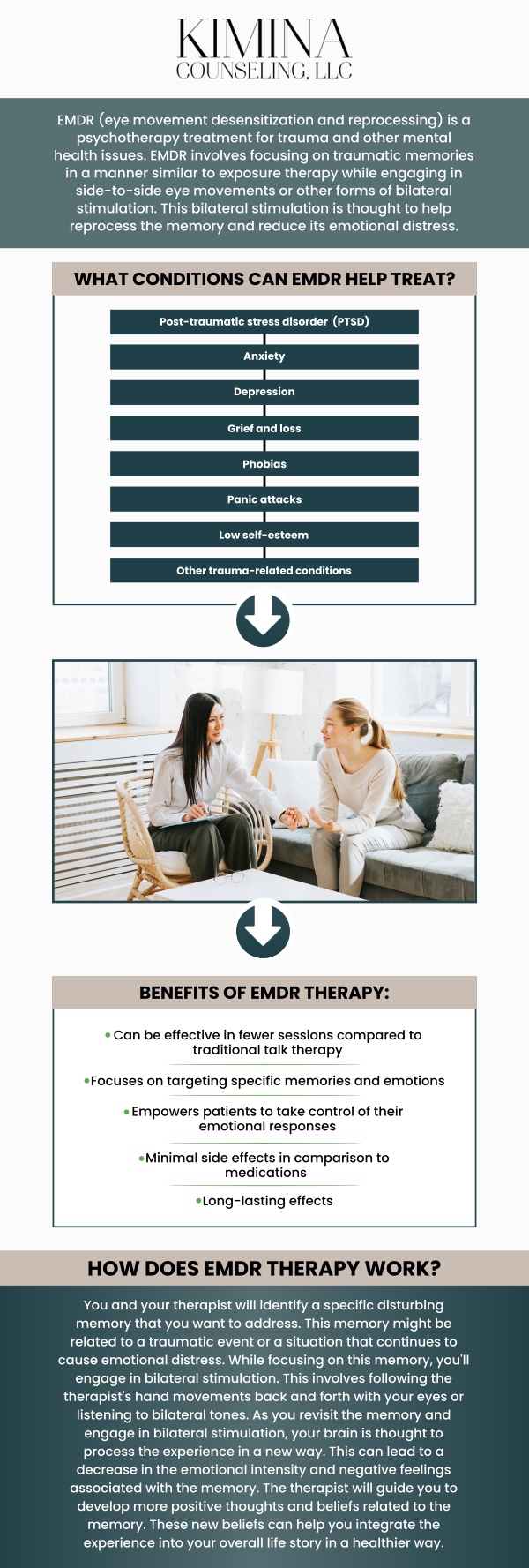
Table of Contents:
Why does my brain keep forcing me to relive traumatic events through sudden, intrusive flashbacks?
How exactly does EMDR therapy work in the brain to process trauma and stop recurring nightmares?
Why do seemingly normal places or sounds trigger an intense physical panic response out of nowhere?
Will addressing these traumatic memories in therapy just make my symptoms worse, or does EMDR make the process safer?
Explore EMDR Therapy for Flashbacks, Nightmares, and Trauma Triggers With Kimberly Sanchez, LMHC, and Amina Mazzara, LMHC at Kimina Counseling in Auburn, MA
Intrusive flashbacks can occur when reminders of a traumatic experience activate memories, emotions, and physical reactions associated with what happened. During a flashback, the experience may feel unusually vivid or immediate, sometimes accompanied by a racing heart, sweating, fear, or a sense that the event is happening again. These reactions are recognized among the re-experiencing symptoms associated with PTSD, although having flashbacks does not automatically mean someone has PTSD.
These memories are not typically recalled intentionally. Trauma-related memories can become highly sensitive to cues in everyday life, so a sound, place, thought, smell, conversation, or situation may activate distress before you consciously understand why. The VA notes that trauma memories can be difficult to process and particularly easy to activate through everyday cues.
At Kimina Counseling our team helps clients understand patterns surrounding intrusive memories, flashbacks, and trauma triggers rather than simply trying to suppress them. Kimberly Sanchez, LMHC, and Amina Mazzara, LMHC, can help clients explore their experiences, strengthen coping and grounding skills, and determine whether a trauma-focused approach such as EMDR may be appropriate for their individual needs.
There is not yet one scientifically established explanation for exactly how EMDR works in the brain. EMDR involves bringing aspects of a distressing memory to mind while simultaneously attending to alternating bilateral stimulation, such as side-to-side eye movements, sounds, or tapping. The goal is to help the memory become less distressing and better integrated with other information rather than continuing to evoke the same intense emotional response. The precise mechanism—including the specific contribution of bilateral stimulation—continues to be studied.
EMDR follows a structured process that includes identifying memories and associated beliefs, emotions, and physical sensations and then working through them in repeated sets of bilateral stimulation. Research supports EMDR as an effective trauma-focused psychotherapy for reducing overall PTSD symptoms. Because recurring trauma-related dreams can be part of PTSD, improvement in the broader condition may also help some individuals with sleep-related symptoms, but EMDR cannot be guaranteed to completely stop nightmares for every person.
At Kimina Counseling we work with clients to understand how trauma-related symptoms are affecting sleep, emotions, relationships, and everyday life. Our team can discuss how EMDR fits into an individualized therapy plan and help clients work toward processing distressing memories in a structured and supportive therapeutic environment.
A place, sound, smell, object, word, or situation can become associated with a traumatic experience even when it seems harmless in the present. When something resembles an aspect of the original event, it may activate a trauma-related stress response before you consciously recognize the connection. PTSD-related triggers can produce both emotional distress and physical reactions such as a racing heart, sweating, tension, or feeling suddenly on edge.
Common trauma reminders can include:
• Sounds that resemble something heard during the traumatic experience.
• Places or environments that share features with where the event occurred.
• Smells, objects, or visual cues connected with the memory.
• Words or conversations that bring aspects of the experience to mind.
• Situations or sensations that create a sense of vulnerability or danger.
Because triggers differ from person to person, recognizing patterns can be an important part of learning how to manage these reactions.
At Kimina Counseling our team can help clients identify personal trauma triggers and understand the emotional and physical responses associated with them. Kimberly Sanchez, LMHC, and Amina Mazzara, LMHC, provide individualized support focused on developing grounding strategies, improving awareness of trigger patterns, and exploring trauma-focused therapy options when appropriate.
Working with traumatic memories can temporarily bring up uncomfortable emotions, thoughts, or physical sensations, so some distress during trauma-focused therapy is possible. EMDR is designed as a structured process rather than asking someone to confront everything at once. Before trauma processing begins, the therapist typically reviews the person’s history, discusses readiness, explains the approach, and teaches strategies for managing emotional and physical stress reactions.
During EMDR, traumatic material is approached in planned stages while the therapist monitors the person’s response. The VA notes that focusing on trauma-related memories can initially feel uncomfortable, but this discomfort is generally brief for many people completing treatment. Treatment should still be individualized, and pacing, readiness, current stability, and other mental health concerns can influence how and when trauma processing is approached.
At Kimina Counseling Kimberly Sanchez, LMHC, and Amina Mazzara, LMHC, work with clients to determine an appropriate pace for addressing difficult experiences rather than rushing into trauma processing. Our team emphasizes preparation, communication, coping skills, and individualized treatment planning so clients can explore whether EMDR is an appropriate approach for their symptoms, comfort level, and therapy goals.
Kimberly Sanchez, LMHC, and Amina Mazzara, LMHC, at Kimina Counseling in Auburn, MA, provide trauma-informed counseling for individuals experiencing flashbacks, nightmares, intrusive memories, and strong reactions to trauma triggers. When appropriate, EMDR therapy may be used as part of a structured treatment approach to help clients process distressing experiences and reduce the intensity of emotional responses connected to past trauma.
Kimberly Sanchez, LMHC, and Amina Mazzara, LMHC, work with each client to understand their symptoms, personal history, readiness for EMDR, and individual therapy goals before developing a personalized care plan. Their approach emphasizes a supportive therapeutic environment, careful pacing, and practical coping strategies designed to help clients feel more grounded, manage trauma-related distress, and move toward greater emotional stability.
For more information, contact us or schedule an appointment online. We are conveniently located at 7 Midstate Drive, Suite 202, Auburn, MA 01501. We serve patients from Auburn MA, North Oxford MA, Worcester MA, Grafton MA, South Worcester MA, Newton Square MA, and surrounding areas.

Check Out Our 5 Star Reviews


Additional Services You May Need
▸ Individual Therapy
▸ Couples Conseling
▸ Family Counseling
▸ EMDR Therapy
▸ Anxiety
▸ Depression
▸ Trauma
▸ Post-traumatic stress disorder (PTSD)
▸ Bipolar Disorder
▸ Serious Mental Illness (SMI)
▸ Parenting and Post-Partum
▸ LGBTQ+
▸ Phobias
▸ Grief
▸ Attachment Disorders
▸ Personality Disorders
▸ Obsessive Compulsive Disorder
▸ Substance Use Disorders
▸ Family Conflict
▸ Attention Deficit (ADHD)
▸ Behavioral Therapy
▸ Anger Management

Additional Services You May Need
▸ Individual Therapy
▸ Couples Conseling
▸ Family Counseling
▸ EMDR Therapy
▸ Anxiety
▸ Depression
▸ Trauma
▸ Post-traumatic stress disorder (PTSD)
▸ Bipolar Disorder
▸ Serious Mental Illness (SMI)
▸ Parenting and Post-Partum
▸ LGBTQ+
▸ Phobias
▸ Grief
▸ Attachment Disorders
▸ Personality Disorders
▸ Obsessive Compulsive Disorder
▸ Substance Use Disorders
▸ Family Conflict
▸ Attention Deficit (ADHD)
▸ Behavioral Therapy
▸ Anger Management




 Send Text
 How May I Help You?