

Why Do I Feel Sad, Angry, or Disconnected From My Baby After Giving Birth?
Emotional changes after giving birth can involve sadness, irritability, frustration, anxiety, exhaustion, or difficulty feeling emotionally connected with a baby. While short-term mood changes can occur during the “baby blues,” severe symptoms or those lasting longer than about two weeks may warrant evaluation for postpartum depression or another perinatal mental health concern. At Kimina Counseling Kimberly Sanchez, LMHC, and Amina Mazzara, LMHC, provide counseling for postpartum emotional concerns, helping clients explore their feelings, manage difficult emotions, and develop supportive coping strategies during the transition to parenthood. For more information, contact us or schedule an appointment online. We are conveniently located at 7 Midstate Drive, Suite 202, Auburn, MA 01501.
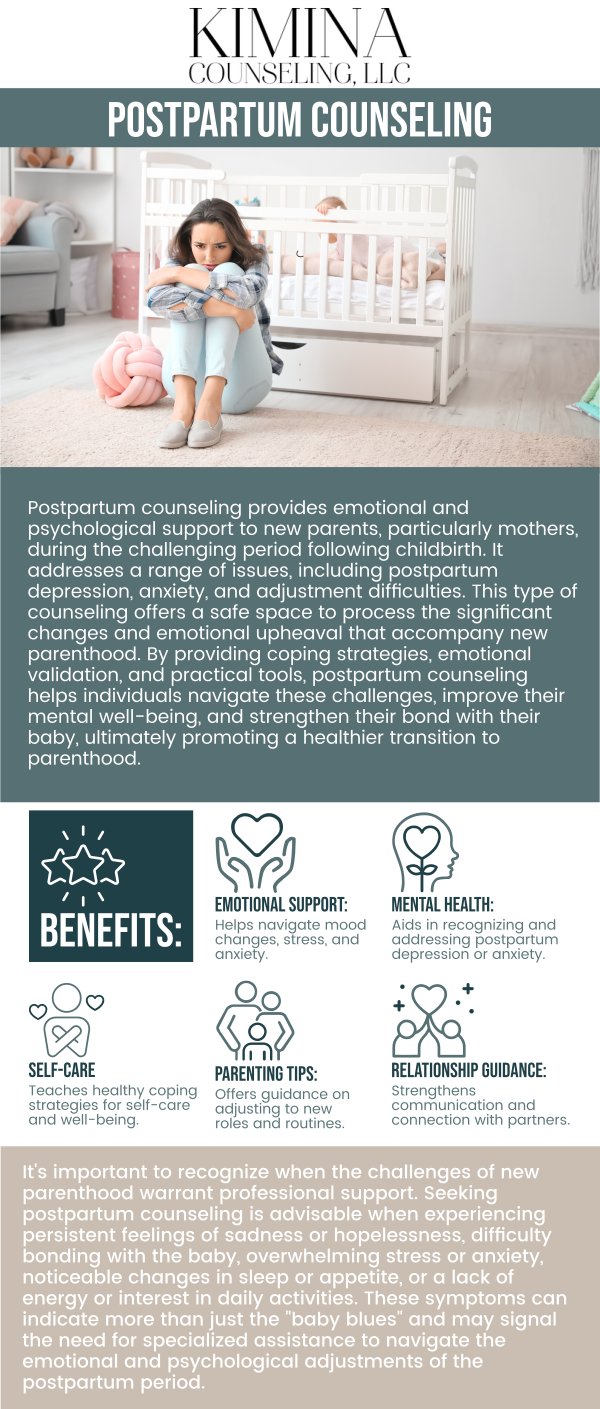
Table of Contents:
Is it normal to feel no immediate bond with my newborn, and does this mean I’m failing as a parent?
Why am I crying every day and feeling entirely overwhelmed during a time when I expected to be happy?
Are intense rage and sudden irritability signs of postpartum depression, or is this just severe sleep deprivation?
How do I tell the difference between the normal “baby blues” and a postpartum mood disorder that requires professional support?
Understand Why You Feel Sad, Angry, or Disconnected From Your Baby After Giving Birth With Kimberly Sanchez, LMHC, and Amina Mazzara, LMHC at Kimina Counseling in Auburn, MA
Not feeling an immediate bond with your newborn can be a normal part of adjusting to parenthood and does not determine your ability to be a caring parent. Bonding does not always happen immediately after birth; for some parents, connection develops gradually through everyday interactions such as holding, feeding, comforting, and responding to their baby’s needs. Physical recovery, exhaustion, stress, and the emotional demands of childbirth can also influence how connected you initially feel.
If feelings of detachment continue or occur alongside persistent sadness, anxiety, hopelessness, severe fatigue, loss of interest, or difficulty caring for yourself or your baby, it may be helpful to discuss these symptoms with a healthcare or mental health professional. Difficulty bonding can occur with perinatal depression, and appropriate evaluation can help determine whether additional emotional support or treatment may be beneficial.
At Kimina Counseling our team understands that every parent’s emotional adjustment after childbirth can look different. Kimberly Sanchez, LMHC, and Amina Mazzara, LMHC, provide compassionate counseling to help clients explore feelings of disconnection, manage postpartum emotional challenges, and develop supportive strategies that can strengthen well-being and confidence during the transition to parenthood.
Crying every day and feeling overwhelmed during a time you expected to be joyful can be confusing and emotionally exhausting. Major life transitions, including having a baby, can bring hormonal changes, disrupted sleep, new responsibilities, relationship adjustments, and pressure to feel happy. When reality does not match expectations, feelings of sadness, guilt, frustration, or emotional overload can become even more difficult to manage.
Frequent crying and persistent overwhelm may sometimes be associated with postpartum depression, anxiety, ongoing stress, or other emotional or physical factors. Symptoms such as low mood, excessive worry, changes in sleep or appetite, loss of interest, difficulty concentrating, or feeling disconnected from your baby may be signs that additional support could be helpful. If these feelings continue, worsen, or interfere with daily life, speaking with a qualified healthcare or mental health professional can help clarify what you are experiencing.
At Kimina Counseling our team provides compassionate support for individuals navigating difficult emotions during the postpartum period and other major life changes. We work with clients to explore contributing stressors, understand emotional patterns, and develop personalized coping strategies that support greater stability, confidence, and overall well-being.
Intense rage, sudden irritability, and emotional volatility can occur during the postpartum period. Sleep deprivation can make anyone feel more impatient, frustrated, or emotionally reactive, especially when rest is repeatedly interrupted. However, when anger feels unusually intense, happens frequently, or seems difficult to control, it may be related to more than exhaustion alone.
Postpartum depression, postpartum anxiety, and other perinatal mental health concerns can sometimes appear as irritability, anger, or rage rather than persistent sadness. Signs that professional support may be helpful include worsening anger, hopelessness, excessive worry, difficulty enjoying usual activities, feeling disconnected from the baby, or emotional symptoms that interfere with relationships and everyday functioning.
At Kimina Counseling our team helps clients explore whether intense irritability may be connected to sleep deprivation, postpartum emotional changes, or a treatable mental health concern. Kimberly Sanchez, LMHC, and Amina Mazzara, LMHC, provide individualized, compassionate counseling focused on understanding symptoms, developing practical coping strategies, and supporting emotional well-being during the transition to parenthood.
The “baby blues” are common after childbirth and may include temporary mood swings, tearfulness, irritability, worry, or feeling overwhelmed. These symptoms are usually mild and tend to improve within about two weeks. A postpartum mood disorder may cause greater, longer-lasting emotional changes that begin to interfere with daily functioning, relationships, self-care, or caring for your baby.
• Duration: Symptoms that last longer than two weeks or continue to worsen may need professional evaluation.
• Intensity: Persistent sadness, anxiety, anger, hopelessness, guilt, or emotional numbness may indicate a postpartum mood concern.
• Daily functioning: Difficulty sleeping, concentrating, eating, completing routine tasks, or caring for yourself can be signs that additional support is needed.
• Connection with your baby: Ongoing difficulty bonding with or feeling emotionally connected to your baby may occur with postpartum depression.
• Persistent worry: Excessive fear about your baby’s safety or difficulty controlling anxious thoughts may warrant professional support.
• Loss of interest: Losing interest or pleasure in activities you normally enjoy can be another warning sign.
• Serious symptoms: Thoughts of harming yourself or your baby, severe confusion, hallucinations, or unusual beliefs require immediate medical attention.
At Kimina Counseling our team provides compassionate support for individuals experiencing persistent sadness, anger, anxiety, emotional overwhelm, or difficulty bonding after childbirth. Kimberly Sanchez, LMHC, and Amina Mazzara, LMHC, work with clients to understand their postpartum experiences, recognize when symptoms may require additional support, and develop personalized coping strategies that promote emotional well-being and adjustment to parenthood.
Kimberly Sanchez, LMHC, and Amina Mazzara, LMHC, at Kimina Counseling in Auburn, MA, provide supportive counseling for individuals experiencing sadness, anger, emotional overwhelm, or difficulty feeling connected with their baby after giving birth. They help clients explore postpartum emotional changes, relationship concerns, stress, and other factors that may be affecting their well-being.
Our approach focuses on creating a comfortable and nonjudgmental space where clients can talk openly about difficult postpartum experiences. Kimberly Sanchez, LMHC, and Amina Mazzara, LMHC, work with each client to develop personalized coping strategies, strengthen emotional awareness, and support a healthier adjustment to the changes that can come with parenthood.
For more information, contact us or schedule an appointment online. We are conveniently located at 7 Midstate Drive, Suite 202, Auburn, MA 01501. We serve patients from Auburn MA, North Oxford MA, Worcester MA, Grafton MA, South Worcester MA, Newton Square MA, and surrounding areas.

Check Out Our 5 Star Reviews


Additional Services You May Need
▸ Individual Therapy
▸ Couples Conseling
▸ Family Counseling
▸ EMDR Therapy
▸ Anxiety
▸ Depression
▸ Trauma
▸ Post-traumatic stress disorder (PTSD)
▸ Bipolar Disorder
▸ Serious Mental Illness (SMI)
▸ Parenting and Post-Partum
▸ LGBTQ+
▸ Phobias
▸ Grief
▸ Attachment Disorders
▸ Personality Disorders
▸ Obsessive Compulsive Disorder
▸ Substance Use Disorders
▸ Family Conflict
▸ Attention Deficit (ADHD)
▸ Behavioral Therapy
▸ Anger Management

Additional Services You May Need
▸ Individual Therapy
▸ Couples Conseling
▸ Family Counseling
▸ EMDR Therapy
▸ Anxiety
▸ Depression
▸ Trauma
▸ Post-traumatic stress disorder (PTSD)
▸ Bipolar Disorder
▸ Serious Mental Illness (SMI)
▸ Parenting and Post-Partum
▸ LGBTQ+
▸ Phobias
▸ Grief
▸ Attachment Disorders
▸ Personality Disorders
▸ Obsessive Compulsive Disorder
▸ Substance Use Disorders
▸ Family Conflict
▸ Attention Deficit (ADHD)
▸ Behavioral Therapy
▸ Anger Management




 Send Text
 How May I Help You?