

FAQs About Postpartum Depression
Postpartum depression (PPD) affects many new parents and can significantly impact emotional well-being. At Kimina Counseling, LLC, we address the symptoms, causes, and effective treatment options for PPD. Kimberly Sanchez, LMHC, and Amina Mazzara, LMHC, offer support to help manage this condition. Our goal is to provide the tools needed to heal and bond with your baby. Below, you’ll find answers to some frequently asked questions about postpartum depression. For more information, contact us or schedule an appointment online. We are conveniently located at 7 Midstate Drive, Suite 202, Auburn, MA 01501.
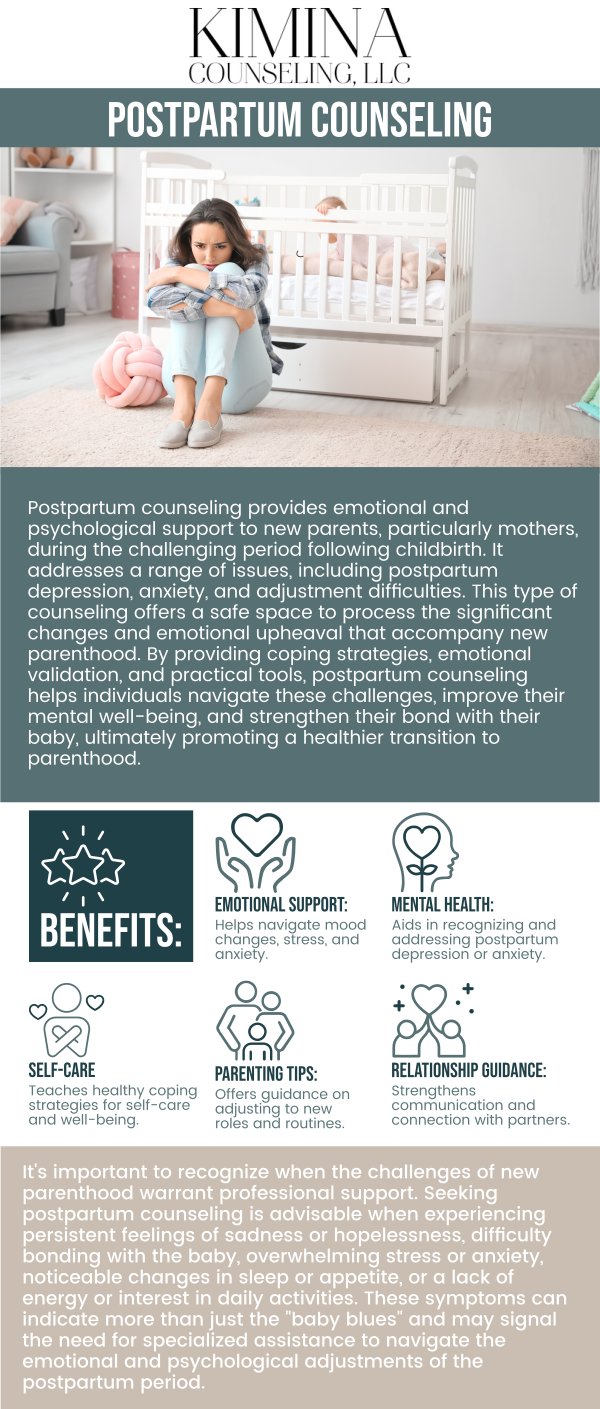
Table of Contents:
What are the symptoms of postpartum depression?
How soon after childbirth can postpartum depression occur?
Is postpartum depression common?
What causes postpartum depression?
How is postpartum depression different from the “baby blues”?
Can postpartum depression affect both moms and dads?
Can postpartum depression affect a mother’s ability to bond with her baby?
What should I do if I think I have postpartum depression?
Can postpartum depression affect breastfeeding?
How can I manage postpartum depression while caring for my baby?
Can postpartum depression happen after multiple pregnancies?
What are the risks of untreated postpartum depression?
Postpartum depression (PPD) can cause persistent feelings of sadness, hopelessness, and emotional numbness. Symptoms include extreme fatigue, irritability, difficulty bonding with the baby, and changes in appetite or sleep patterns. Some mothers may experience anxiety, guilt, or thoughts of harming themselves or the baby. PPD can interfere with daily life, making it difficult to care for both oneself and the baby.
Postpartum depression can develop anytime within the first year after childbirth, though it often begins within the first few weeks. It may start gradually or appear suddenly. While many new mothers experience mild mood swings or the “baby blues” after birth, postpartum depression lasts longer and is more intense. Prompt recognition of symptoms can help in getting timely support and treatment.
Yes, postpartum depression is relatively common, affecting about 1 in 7 new mothers. The condition can occur after any pregnancy, and its impact can range from mild to severe. Many women experience significant emotional distress after childbirth, and PPD is one of the more severe forms of this. Understanding that postpartum depression is common can help reduce the stigma and encourage seeking help.
Postpartum depression is caused by a combination of physical, emotional, and environmental factors. Rapid hormonal changes after childbirth are believed to play a role, along with physical exhaustion, stress, and the emotional adjustments of becoming a parent. Past mental health issues, a lack of support, and challenging birth experiences can increase the risk of developing PPD.
The “baby blues” typically occur within the first few days to weeks after childbirth and are characterized by mood swings, anxiety, and irritability. However, these symptoms usually subside within two weeks. Postpartum depression, on the other hand, lasts longer and is more intense. PPD can interfere with daily functioning, and it often requires professional treatment to manage.
Yes, postpartum depression can affect both mothers and fathers. While it is more common in mothers due to hormonal and physical changes, new fathers can also experience emotional distress, fatigue, and anxiety. The stress of adjusting to parenthood, changes in relationship dynamics, and sleep deprivation can contribute to PPD in fathers, impacting their emotional well-being and family life.
Yes, postpartum depression can make it difficult for mothers to bond with their babies. Feelings of guilt, inadequacy, and emotional numbness can interfere with the natural attachment process. A mother experiencing PPD may struggle with feelings of disconnection from her baby, which can be distressing. However, with support and treatment, many mothers can regain the emotional connection with their child.
If you think you have postpartum depression, the first step is to talk to your healthcare provider. They can assess your symptoms and recommend appropriate treatment, which may include therapy or support groups. It’s important to reach out early, as treatment can significantly improve outcomes. Don’t hesitate to seek help; you don’t have to go through it alone.
Yes, postpartum depression can affect breastfeeding. The emotional distress, lack of energy, and feelings of inadequacy associated with PPD can make it challenging for mothers to breastfeed. Mothers with PPD may struggle with low milk supply, anxiety about feeding, or a lack of interest in bonding through breastfeeding. Support from healthcare providers and lactation consultants can help address these challenges.
Managing postpartum depression while caring for a newborn can be challenging, but it is possible with the right support. Seek help from family and friends for respite and self-care. Prioritize rest, even if it’s in short bursts, and don’t hesitate to ask for professional help. Therapy, medication, and support groups can provide valuable tools to manage symptoms while meeting the needs of your baby.
Yes, postpartum depression can occur after any pregnancy, and it can affect subsequent pregnancies even if it didn’t occur after the first. Each pregnancy and postpartum experience is different, and some women may develop PPD after one or more pregnancies. Previous experiences with postpartum depression may increase the risk, so it’s important to monitor for symptoms and seek help if needed.
Untreated postpartum depression can lead to long-term emotional, physical, and relational issues. It can negatively affect the mother’s mental health, her ability to care for her baby, and her relationships with family members. Additionally, untreated PPD may lead to feelings of isolation, anxiety, and, in severe cases, thoughts of self-harm. Early intervention is crucial to prevent these risks and ensure a healthy recovery.
Postpartum depression is a serious but treatable condition that affects many new parents. If you or someone you know is struggling with symptoms, it’s important to reach out for support. Kimberly Sanchez, LMHC, and Amina Mazzara, LMHC, at Kimina Counseling, LLC, are here to provide the support you need during this challenging time. Remember, seeking help early can make a significant difference in your recovery and overall well-being. You are not alone, and support is available to help you through this journey. For more information, contact us or schedule an appointment online. We are conveniently located at 7 Midstate Drive, Suite 202, Auburn, MA 01501. We serve patients from Auburn MA, North Oxford MA, Worcester MA, Grafton MA, South Worcester MA, Newton Square MA, and surrounding areas.

Check Out Our 5 Star Reviews


Additional Services You May Need
▸ Individual Therapy
▸ Couples Conseling
▸ Family Counseling
▸ EMDR Therapy
▸ Anxiety
▸ Depression
▸ Trauma
▸ Post-traumatic stress disorder (PTSD)
▸ Bipolar Disorder
▸ Serious Mental Illness (SMI)
▸ Parenting and Post-Partum
▸ LGBTQ+
▸ Phobias
▸ Grief
▸ Attachment Disorders
▸ Personality Disorders
▸ Obsessive Compulsive Disorder
▸ Substance Use Disorders
▸ Family Conflict
▸ Attention Deficit (ADHD)
▸ Behavioral Therapy
▸ Anger Management

Additional Services You May Need
▸ Individual Therapy
▸ Couples Conseling
▸ Family Counseling
▸ EMDR Therapy
▸ Anxiety
▸ Depression
▸ Trauma
▸ Post-traumatic stress disorder (PTSD)
▸ Bipolar Disorder
▸ Serious Mental Illness (SMI)
▸ Parenting and Post-Partum
▸ LGBTQ+
▸ Phobias
▸ Grief
▸ Attachment Disorders
▸ Personality Disorders
▸ Obsessive Compulsive Disorder
▸ Substance Use Disorders
▸ Family Conflict
▸ Attention Deficit (ADHD)
▸ Behavioral Therapy
▸ Anger Management




 Send Text
 How May I Help You?